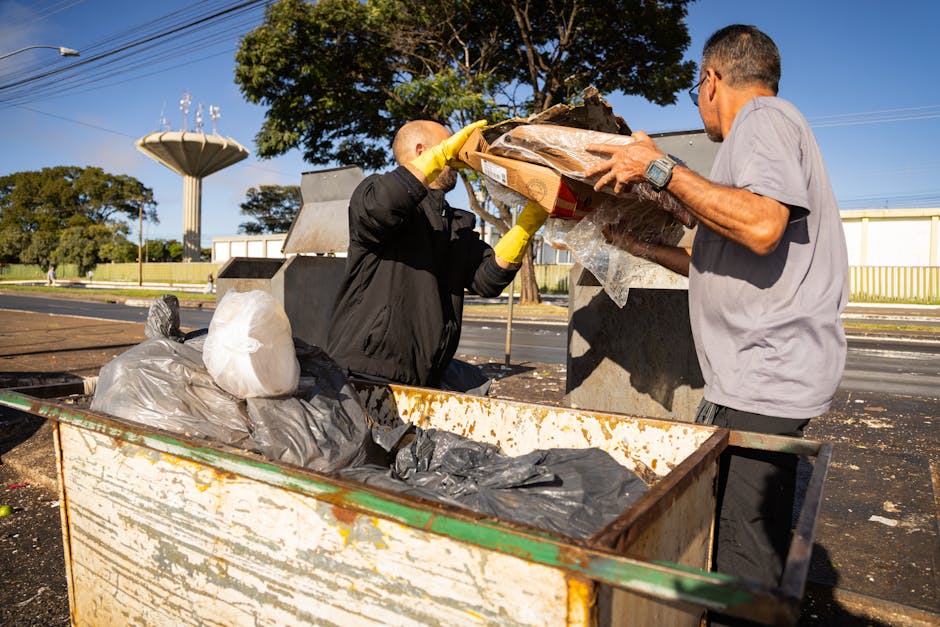
Waste disposal rules for Harringay removal companies: what to know, what to avoid, and how to stay compliant
If you run removals in Harringay, waste can become a quiet headache very quickly. One minute you are moving a sofa, the next you are left with broken boxes, old mattresses, bagged clutter, a dismantled wardrobe, and a customer asking, "Can you take that too?" The answer depends on the type of waste, where it came from, and how it is handled. That is why understanding waste disposal rules for Harringay removal companies matters so much. Get it wrong and the job becomes messy, expensive, and risky. Get it right and you protect your customers, your crew, and your reputation.
This guide breaks the subject down in plain English. It explains what the rules mean in practice, how removal companies should sort, carry, store, and dispose of waste, and where sensible local process makes life easier. You will also find a checklist, a comparison table, and a realistic example from the kind of work many teams deal with on an ordinary London day. Nothing fancy. Just the stuff that actually helps.
- Why waste disposal rules matter
- How the rules work in practice
- Benefits of getting disposal right
- Who needs this guidance
- Step-by-step process
- Expert tips for smoother jobs
- Common mistakes to avoid
- Tools and practical resources
- Compliance and best practice
- Methods compared
- Real-world example
- Checklist
- Conclusion
- Frequently asked questions
Why Waste disposal rules for Harringay removal companies Matters
Removal work is not only about lifting and transporting. It also involves deciding what counts as reusable goods, what is true waste, what needs special handling, and what should never be mixed together. In Harringay, where lots of moves happen in flats, terraces, converted buildings, and busy streets, waste has to be handled neatly. There is usually not much space to leave things lying around, and that alone can turn a small issue into a public one very fast.
The main reason these rules matter is simple: waste from a removals job does not belong in the same category as general household rubbish. Once you take control of someone else's unwanted items, you are responsible for how they are stored, moved, and passed on. That responsibility includes avoiding fly-tipping, preventing contamination, and making sure anything removed from the property is handled lawfully.
To be fair, many problems start with a misunderstanding. A customer says, "Just take the lot," and the job is rushed. But a removal company still has to think carefully about items like paint tins, electricals, batteries, fridges, broken mirrors, mattresses, and anything that may contain hazardous components. A quick job can become a compliance mess if nobody checks the basics.
This is also about trust. People notice when a crew leaves a property tidy and takes waste seriously. They notice the opposite too. One muddy bag left on a pavement outside a Harringay block at 8am is enough to make a resident complain. Nobody wants that, least of all the removals firm whose name ends up in the middle of it.
For companies that handle frequent moves, the rules also affect pricing and time planning. Waste takes space in the van. It can require segregation. Sometimes it needs a specialist disposal route. If you treat all waste as if it were one simple thing, you risk underquoting and overpromising. That's where jobs start to slip.
How Waste disposal rules for Harringay removal companies Works
In practice, the process starts before the van even arrives. Good removals teams ask what needs moving, what needs clearing, and whether anything is being left behind. That early conversation helps you separate a standard move from a move-and-clearance. It sounds obvious, but plenty of headaches come from not asking the right question early enough.
Once on site, waste should be sorted into broad groups. Not every company will label them the same way, but the logic is broadly similar:
- Reusable items - furniture, homeware, boxes, and goods that can be kept in circulation.
- Recyclable waste - cardboard, some plastics, metals, and other clean materials where recycling is appropriate.
- General waste - broken, contaminated, or unrecoverable items that cannot be reused or recycled.
- Special or restricted items - electricals, fridges, batteries, liquids, paints, and anything that needs extra care.
The removal company then decides where each item goes. Some materials can be taken to a permitted waste facility. Some may go through reuse channels. Some might be stored temporarily if the customer wants them kept for later, which is where options like short-term storage or mobile self storage can be useful for bridging a move without dumping perfectly usable items.
There is also the practical question of transport. Waste in a vehicle should be secure, stable, and separate enough to avoid damage or leakage. That matters especially on local runs through tight streets, where sudden stops, stair-lifts, narrow entrances, and awkward parking all add pressure. A van loaded badly is not just inconvenient. It is a risk.
For some jobs, the best route is not disposal at all, but planned separation. Customers moving out of a flat may want to keep surplus furniture for later. In that case, a company may advise on furniture storage or broader removals and storage rather than treating everything as waste. That distinction saves money and avoids unnecessary disposal.
The key thing is that waste disposal is a chain, not a single act. From the moment a crew identifies an item as waste to the moment it is handed over, the company should know what it is, where it is going, and why. If that chain breaks, trouble usually follows.
Key Benefits and Practical Advantages
There are some very direct benefits to taking waste seriously, and they go well beyond "staying out of trouble." In real jobs, good waste handling makes the whole operation calmer.
- Cleaner jobsites: customers see a neat process, not a pile of mixed rubbish.
- Lower risk of complaints: fewer disputes about what was left, taken, or damaged.
- Better cost control: fewer surprise disposal charges and fewer wasted journeys.
- Stronger reputation: people remember a tidy, responsible crew.
- Less operational friction: crews waste less time deciding what to do with odd items.
There is also a commercial advantage. Customers increasingly want removal firms that can explain what happens to unwanted items. They might not ask for a formal policy, but they do want reassurance. A company that can talk confidently about recycling, reuse, and compliant disposal sounds far more reliable than one that shrugs and says, "We'll figure it out."
That confidence shows up in more than one part of the business. It supports better quoting, cleaner operations, and often better customer retention. If a family is moving house and sorting through years of accumulation, they want a calm plan. If a small business is relocating offices and disposing of old filing cabinets, monitors, and broken furniture, they want practical guidance. Not waffle.
When handled well, waste disposal can even reduce stress on the day. A crew that knows what to separate, what to leave, and what to transfer to storage works with less hesitation. You can feel the difference on a wet Tuesday morning when time is tight and the stairs are narrow. Everything runs a bit smoother. Not glamorous, but real.
Who This Is For and When It Makes Sense
This topic matters to more people than you might think. Obviously, it is relevant to removals firms in Harringay, but it also affects independent van operators, small clearance teams, and companies that bundle removals with storage or packing.
It is especially useful if you:
- handle house removals or flat moves with leftover items
- offer office clear-outs or business relocations
- move bulky furniture and need to remove packaging waste afterwards
- deal with customers who are downsizing
- frequently encounter broken, unwanted, or unsalvageable items
- need to separate disposal from temporary holding or storage
For example, a family moving from a Harringay terrace might decide at the last minute that the old wardrobe is not coming with them. A student move may produce boxes, bedding, and a few damaged items that cannot be reused. An office relocation may uncover a tangle of cables, obsolete peripherals, and furniture that no longer fits the new layout. Different jobs, same underlying issue: what do you do with the things that are left behind?
It also makes sense when you are deciding what service to book. Sometimes a customer thinks they need a full disposal service, but actually they need small removals plus a bit of sensible sorting, or perhaps packing services to reduce breakage and packaging waste in the first place. Other times, the better answer is a structured clear-out combined with household storage while they decide what stays and what goes.
The truth is, the same rules can feel different depending on the job size. A one-bed flat move is not the same as an office relocation or a multi-item house clearance. But the habits are similar: sort early, protect the environment, keep records where needed, and do not assume everything can just be thrown in together. That way lies chaos. And a late finish.
Step-by-Step Guidance
If you want a practical framework, use this. It keeps waste handling simple without pretending every move is the same.
- Identify waste before moving day. Ask the customer what is staying, what is going, and what may need storage. A few careful questions at booking stage save a lot of backtracking later.
- Separate reusable items from true waste. Good-quality goods should not be treated like rubbish just because the client no longer wants them. In many jobs, this is the difference between disposal and rehoming.
- Spot restricted items early. Electricals, batteries, liquids, and anything suspicious should be flagged before loading. Nobody wants a mystery leak in the back of a van.
- Load waste safely. Keep bags secure, avoid crushing fragile materials unnecessarily, and make sure heavier items cannot slide around.
- Use the right disposal route. Waste should go where it is permitted to go. Recyclables should be separated where possible; general waste should not be mixed with reusable stock.
- Keep the work area tidy. A neat site reduces trip hazards and gives the customer confidence that the team knows what it is doing.
- Confirm what was removed. A quick handover note, internal job sheet, or customer summary helps avoid disputes later.
One small but important point: if you are doing both removals and storage, be clear what belongs where. A box set aside for secure storage is not the same as a waste sack, and mixing the two causes needless confusion. It sounds basic, but on busy days basic is exactly what gets forgotten.
For companies with mixed workloads, a simple truck-side system helps. Mark one area for keep, one for donate/reuse, one for recycle, and one for disposal. Nothing elaborate. Just enough structure that a tired crew member at the end of the day does not make a bad call because everything looks the same under those grey London clouds.
Expert Tips for Better Results
In our experience, the best waste handling systems are not complicated. They are consistent. Small habits make a huge difference over time.
- Build waste questions into the quote. Customers often remember "the big stuff" and forget the smaller mess. Prompt them gently.
- Keep a clear no-go list. Every team should know which items need special handling.
- Use transparent pricing. If disposal is extra, say so early. Surprises create friction.
- Train crews on sorting, not just lifting. A strong back is useful. A clear decision process is better.
- Offer storage as an alternative to disposal. People often need time, not landfill.
Another useful habit is to walk through the property once more before leaving. Sounds obvious, I know, but you would be amazed what gets missed behind a door, under a bed, or in a shed corner. That final check catches loose packaging, stray screws, old curtain rails, and other bits that can turn into noise after the van has gone.
If your business serves local households as well as commercial clients, it can help to align waste handling with your broader service pages. For example, teams offering house removals and office removals often need slightly different waste workflows. Houses create clutter, packaging, and bulky furniture; offices generate equipment, paperwork, and fit-out waste. Same principle, different rhythm.
And yes, sometimes the best tip is the boring one: label things properly. Boring works. Boring keeps you out of bother.
Common Mistakes to Avoid
Most waste-related problems in removals are not dramatic. They are ordinary mistakes made on ordinary days. That is what makes them annoying.
- Assuming everything can be dumped together. Mixed loads are harder to manage and easier to mishandle.
- Not checking for special items. One hidden battery or liquid container can change how a whole load should be treated.
- Leaving waste on the pavement. Even temporarily, this can create complaints and safety issues.
- Failing to separate reuse from disposal. Good items are often lost because the team moves too quickly.
- Underquoting disposal time. It always takes longer than people think. Always.
- Skipping a final property sweep. Small missed items become avoidable call-backs.
Another common issue is overpromising. A customer may ask whether a firm can "take everything." That sounds simple, but it is not always a safe or lawful promise. A more careful answer is better: yes, we can remove and sort the items we are permitted to handle, but some things may need separate processing or may be better placed into storage.
That answer feels less slick, but it is much more professional. And frankly, clients usually appreciate honesty. Nobody likes a polished sales line that falls apart on the landing.
Tools, Resources and Recommendations
You do not need fancy equipment to improve waste handling. A few practical tools go a long way.
- Strong labels and marker pens for keeping loads separated.
- Durable sacks and crates for small waste and loose items.
- Blanket wraps and straps to stop items shifting in transit.
- Job sheets or digital notes for recording what was removed, stored, or left behind.
- PPE such as gloves and suitable footwear for handling rough or sharp items.
From a service-planning point of view, it also helps to think about the customer journey. Some clients only need disposal. Others need a blend of removals, packing, and temporary holding. In those cases, services such as man and van, local removals, or removals can be paired with storage in a way that reduces waste in the first place.
For businesses, document-heavy jobs may need different handling again. Old archives, files, and office paperwork should never be left in the van without a clear decision on whether they are waste, sensitive material, or items for document storage. That one choice can matter a lot more than people expect.
If you are offering a premium service, it is also worth directing customers to your company's own trust pages, such as recycling and sustainability, health and safety policy, and insurance and safety. Those pages help reassure people that the company takes the subject seriously, not as an afterthought.
Law, Compliance, Standards, or Best Practice
Waste handling in removals should always be approached carefully. In the UK, removal companies are generally expected to avoid fly-tipping, prevent unsafe handling, and make sure waste is passed to appropriate, lawful disposal routes. Depending on the material involved, additional duties may apply for hazardous or restricted items. The exact legal detail can vary, so the safest approach is to treat compliance as a working habit, not a one-time checkbox.
Best practice usually includes:
- knowing what type of waste is being handled
- separating reusable goods from actual waste
- using proper disposal and recycling channels
- keeping internal records of what was taken
- training staff to recognise items that need extra care
For Harringay operators, local conditions matter too. Tight parking, shared entrances, and busy residential streets mean that loading and unloading should be done with public safety in mind. A skipped step on a crowded pavement can quickly become someone else's trip hazard. That is not just poor manners; it is poor practice.
If your company also stores customer goods, it is worth having clear terms around ownership, abandonment, and disposal timing. Written terms and fair customer communication help avoid disputes. A practical approach here is usually better than a clever one. If a customer has not agreed to disposal, do not casually assume consent.
As a rule of thumb, the more uncertain the item, the slower the decision should be. That is not indecision. That is care.
Options, Methods, or Comparison Table
Different waste situations call for different handling methods. Here is a simple comparison that removal companies can use when planning jobs.
| Method | Best for | Strengths | Trade-offs |
|---|---|---|---|
| Reuse or resale | Good-condition furniture, household items, office equipment | Reduces waste, better value, more sustainable | Needs sorting and sometimes storage time |
| Recycling | Cardboard, some metals, selected clean materials | Responsible, tidy, often straightforward | Materials must be separated properly |
| General waste disposal | Broken, dirty, or mixed items that cannot be recovered | Simple for unusable items | Can be more expensive and less sustainable |
| Temporary storage | Items the customer may keep but not yet decided on | Prevents unnecessary disposal | Needs planning and space |
For many Harringay jobs, the best option is not one single method but a mix. A house move might involve storage for winter coats and furniture, recycling for packaging, and disposal for broken items. An office move might keep archived files in office storage while clearing out surplus desks and chairs through compliant disposal. That mixed approach is often the most practical. It's rarely all-or-nothing.
Case Study or Real-World Example
Here is a realistic example from the sort of job a Harringay removal team might face on a damp Friday morning. A couple in a first-floor flat are moving to a larger place nearby. They have a sofa they want to keep, two bookcases they are undecided about, several boxes of books, a broken bedside cabinet, and a pile of flattened packaging from a new bed frame. They also find a small bag of mixed odds and ends in the hallway. Nobody remembers packing it, of course.
The crew arrives, walks through the property, and separates the items into four groups: move, store, recycle, and dispose. The sofa and books go on the van. The two bookcases are set aside because the clients are not sure yet; they are later placed into short-term storage. The cardboard and clean packing material are flattened for recycling. The damaged cabinet and the mystery bag are marked as waste, checked for anything restricted, and loaded carefully.
Because the crew sorted early, the move finishes without confusion. The hallway stays clear. The lift is not blocked. The customer does not have to make rushed decisions at the kerbside. And the company avoids a half-hour of "Wait, was that staying or going?" which, honestly, can drain the life out of an otherwise good day.
The result is not just cleaner waste handling. It is a better customer experience. People remember that. They might not remember every bolt or box, but they remember that the team was calm, tidy, and clear about what happened to their belongings. That is the real win.
Practical Checklist
Use this checklist before, during, and after a removal job that may create waste.
- Ask whether the job includes disposal, recycling, or only removal.
- Confirm whether any items need to be stored rather than thrown away.
- Check for electricals, batteries, liquids, and other restricted items.
- Separate reusable goods from waste before loading.
- Keep recyclable packaging apart from general rubbish.
- Secure all waste in the van so it cannot move around.
- Make sure the property is left clean and safe.
- Record what was removed, stored, or left behind.
- Be clear with the customer about any items that could not be handled as waste.
- Review the job afterwards so the next one runs even better.
If you run repeat work, this kind of checklist should become second nature. It saves time, reduces arguments, and keeps standards steady when the day gets busy. And yes, the day will get busy. It always does.
Get a free quote today and see how much you can save.
Conclusion
Waste disposal rules for Harringay removal companies are really about discipline, clarity, and respect for the job. When waste is sorted properly, customers feel looked after, crews work more safely, and companies avoid the common mistakes that lead to complaints or wasted time. It is not glamorous work, but it is the kind of detail that separates a decent removals operation from a truly reliable one.
If you are planning a move, a clearance, or a combined removals-and-storage job, the smartest approach is to decide early what should be kept, what can be reused, what needs storage, and what genuinely belongs in disposal. That simple structure makes the whole day easier. Less stress, fewer surprises, and a cleaner finish. Not bad for something most people only think about at the last minute.
And that final bit matters. A well-handled job leaves more than an empty room behind. It leaves confidence. That goes a long way.
Frequently Asked Questions
What are the main waste disposal rules for Harringay removal companies?
The main rules are to identify the waste correctly, separate reusable and recyclable items where possible, avoid unsafe handling, and use lawful disposal routes. Removal firms should not treat every unwanted item the same way.
Can a removal company take everything the customer no longer wants?
Not always. Some items may need special handling, some may be better stored, and some may not be suitable for a normal waste run. A responsible company will explain the limits clearly before collection.
Do removal companies need to separate recycling from general waste?
Yes, whenever it is practical. Cardboard, clean packaging, and some other materials should not be mixed with contaminated rubbish. Separation is cleaner, more efficient, and usually better practice overall.
What happens to furniture that is still in good condition?
It should usually be treated as a reusable item rather than waste. Depending on the customer's plans, it may be moved, stored, or passed on for reuse instead of being disposed of.
Are electrical items allowed in a normal removals load?
They can be moved, but they should be handled carefully and identified early. Some electrical items need different treatment at disposal stage, especially if they are damaged or contain batteries.
How should a removal company handle broken items?
Broken items should be checked to see whether any parts are recyclable or restricted. They should then be loaded securely and taken to an appropriate disposal route, not casually mixed into a random pile.
Is temporary storage better than disposal for some items?
Often, yes. If the customer is undecided or moving in stages, storage can stop useful items being thrown away too soon. That is where services like short-term or secure storage can be genuinely helpful.
What is the biggest mistake removal companies make with waste?
The most common mistake is not asking enough questions before the job starts. If waste, storage, and reuse are not discussed early, the team is left guessing on the day, and guessing is not a good system.
Should waste handling be included in the quote?
Ideally, yes. If disposal could add time, labour, or separate processing costs, that should be made clear in the quote so the customer knows what to expect.
How can removal companies stay compliant without overcomplicating the job?
Keep it simple: sort early, train staff, use proper loading methods, avoid unsafe items, and keep records of what was removed. A straightforward process is usually the most reliable one.
Can office removals and house removals follow the same waste process?
The overall principles are the same, but the items differ. Offices often produce paperwork, equipment, and furniture; homes produce packaging, household clutter, and bulky furniture. The process should flex to match the job.
What should a customer ask before booking a removals company in Harringay?
They should ask how waste is handled, whether recycling is offered, what happens to reusable items, and whether storage is available if they are not ready to dispose of everything. Those questions usually reveal a lot about the company's standards.